
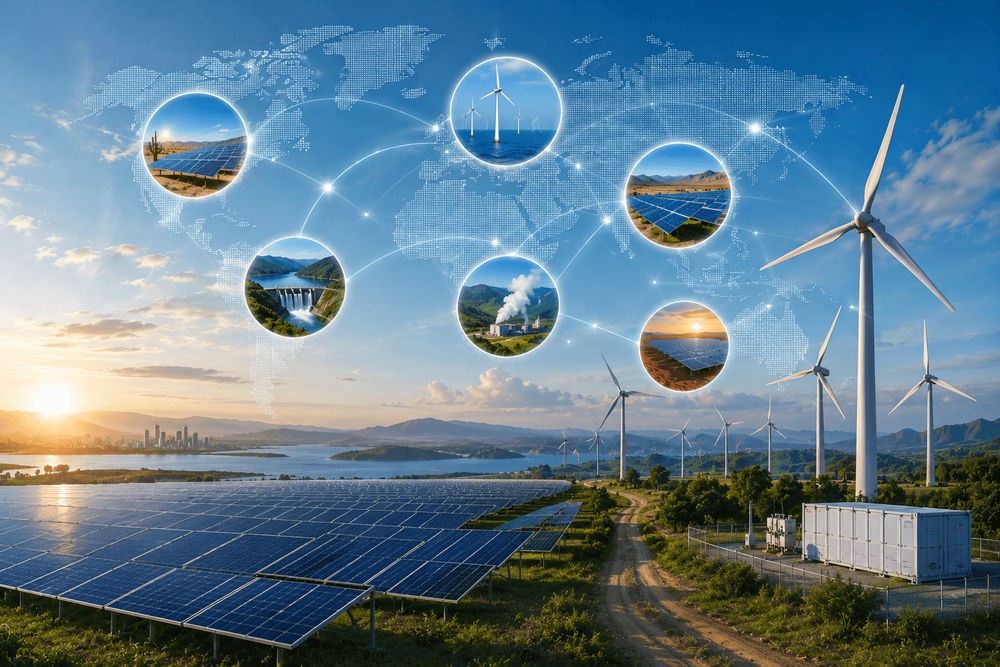
Renewable Energy Around the World: What India Can Learn from Global Leaders in Solar & Wind Energy
Renewable energy is no longer a niche industry—it is a global economic transformation. Countries around the world have adopted different strategies to accelerate the deployment of solar and wind energy, improve grid infrastructure, encourage private investment, and reduce carbon emissions. While each nation has unique geographical and economic conditions, many of their experiences offer valuable lessons for India. This article explores some of the world's leading renewable energy markets and examines how their successes can help shape India's transition toward a cleaner and more resilient energy future.
Introduction
The global energy landscape has changed dramatically over the last two decades. Solar panels have become more affordable. Wind turbines have become larger and more efficient. Battery storage is rapidly improving. Artificial Intelligence is making power plants smarter. Governments, businesses, and investors are now treating renewable energy as essential infrastructure rather than an alternative technology. Today, countries compete not only in manufacturing renewable energy equipment but also in attracting investment, strengthening electricity grids, and developing clean energy ecosystems. India has emerged as one of the world's fastest-growing renewable energy markets, but it is also part of a much larger global movement. By studying how other nations approached their renewable energy transition, India can adopt proven strategies while avoiding common challenges.
Why Global Experience Matters
Although every country has different geography, climate, and regulations, successful renewable energy markets often share common characteristics:
- Long-term policy stability
- Strong transmission infrastructure
- Advanced technology adoption
- Skilled workforce
- Private sector participation
- Efficient project development
- Continuous innovation
These pillars have helped renewable energy become a major contributor to national electricity systems.
China: Manufacturing at an Unprecedented Scale
China is the world's largest producer and installer of solar panels and wind turbines. Its success has been driven by:
- Massive manufacturing capacity
- Large-scale domestic deployment
- Investment in transmission infrastructure
- Continuous research and development
- Integrated supply chains
Lesson for India
China demonstrates how manufacturing strength and infrastructure planning can significantly reduce renewable energy costs while accelerating deployment. Expanding domestic manufacturing, strengthening supply chains, and investing in transmission networks can enhance long-term energy security.
Germany: The Power of Long-Term Policy
Germany has been a pioneer in renewable energy adoption. Its energy transition, known as the Energiewende, focused on:
- Stable policy frameworks
- Grid modernization
- Distributed renewable generation
- Public participation
- Energy efficiency
Lesson for India
Germany also demonstrated the importance of integrating renewable energy with a reliable electricity system. Consistent long-term policies encourage investment and create confidence among developers and financial institutions.
Denmark: Becoming a Wind Energy Leader
Despite its relatively small size, Denmark has become one of the world's most recognized wind energy nations. Its achievements include:
- Advanced wind turbine technology
- Offshore wind leadership
- Strong engineering expertise
- Close collaboration between government and industry
Lesson for India
Wind energy now contributes significantly to Denmark's electricity generation. Continuous innovation and industry collaboration can help build globally competitive renewable energy sectors.
United States: Innovation Through Technology
The United States has developed one of the world's largest renewable energy industries through:
- Utility-scale solar
- Large wind farms
- Battery storage
- AI-driven energy management
- Smart grids
- Corporate renewable energy procurement
Lesson for India
American companies continue developing advanced software, monitoring systems, and digital technologies that improve renewable energy efficiency. Technology and digital innovation are becoming as important as physical infrastructure.
Australia: Integrating Solar, Wind, and Storage
Australia has rapidly expanded renewable energy through:
- High solar adoption
- Utility-scale battery projects
- Renewable Energy Zones
- Grid modernization
- Strong private investment
Lesson for India
Its experience shows that storage plays an increasingly important role in maintaining grid reliability. Battery Energy Storage Systems (BESS) will become increasingly valuable as renewable energy capacity grows.
Spain: Combining Solar and Wind
Spain has successfully developed both solar and wind energy while modernizing its electricity infrastructure. Key strengths include:
- Strong renewable resource utilization
- Modern transmission planning
- Large utility-scale projects
- Efficient grid integration
Spain demonstrates how multiple renewable technologies can complement one another.
Lessons Common Across Global Leaders
- Success Factor
- Why It Matters
- Modern Grid Infrastructure
- Enables reliable power evacuation
- Stable Policies
- Encourages long-term investment
- Advanced Technology
- Improves efficiency and lowers costs
- Manufacturing Ecosystems
- Strengthens energy security
- Skilled Workforce
- Supports large-scale deployment
- Digital Monitoring
- Optimizes plant performance
- Energy Storage
- Improves grid flexibility
- Research & Innovation
- Drives continuous improvement
Although each country followed a different path, several common themes emerge:
Where India Stands Today
India has already made remarkable progress in renewable energy. Key strengths include:
- One of the world's largest renewable energy expansion programs
- Rapid growth in utility-scale solar
- Strong wind energy potential
- Increasing domestic manufacturing
- Expanding Green Energy Corridors
- Growing Battery Energy Storage initiatives
- National Green Hydrogen Mission
- Increasing adoption of hybrid renewable projects
These developments position India among the world's most important renewable energy markets.
Opportunities for India
Looking ahead, India can further strengthen its renewable energy ecosystem by focusing on:
- Faster transmission expansion
- Grid modernization
- AI-enabled power systems
- Advanced battery storage
- Offshore wind development
- Domestic manufacturing
- Skilled workforce development
- Faster project execution
- Digital land assessment
- Sustainable community engagement
These priorities will support the country's long-term clean energy ambitions.
What This Means for Landowners
Global experience highlights one important fact: High-quality renewable energy projects begin with high-quality land. Around the world, developers prioritize land that offers:
- Strong solar or wind resources
- Clear legal ownership
- Good road connectivity
- Access to transmission infrastructure
- Suitable terrain
- Environmental compatibility
As India's renewable energy sector continues to mature, professional land assessment will become even more important.
How Velante NRG Supports India's Renewable Energy Future
At Velante NRG, we apply globally recognized best practices in renewable energy land assessment and project planning. By combining GIS mapping, satellite imagery, infrastructure analysis, legal due diligence, and engineering feasibility studies, we help identify land suitable for utility-scale solar, wind, and hybrid energy projects. As India continues learning from successful renewable energy markets worldwide, our commitment is to support responsible project development that benefits landowners, developers, and the broader clean energy transition.
Frequently Asked Questions
Which country leads the world in renewable energy?
Different countries lead in different areas. China is the largest installer and manufacturer of solar and wind equipment, Denmark is a leader in wind energy, Germany is known for its long-term energy transition policies, and Australia has demonstrated strong integration of renewable energy with battery storage.
Why is transmission infrastructure important?
Without adequate transmission infrastructure, electricity generated by renewable energy projects cannot be efficiently delivered to consumers, making grid planning a critical part of project development.
Can India become a global renewable energy leader?
India already ranks among the world's fastest-growing renewable energy markets. Continued investment in transmission, storage, manufacturing, and technology will further strengthen its global position.
Why should landowners understand global renewable energy trends?
Global developments influence technology, investment, project planning, and land demand. Understanding these trends helps landowners better appreciate the growing importance of suitable land for renewable energy development.
Conclusion
The global renewable energy transition offers valuable lessons for every country. From China's manufacturing scale and Germany's policy consistency to Denmark's wind innovation and Australia's leadership in battery storage, each success story demonstrates that long-term planning, modern infrastructure, and technological innovation are essential for building a resilient clean energy future. India is well positioned to become one of the world's leading renewable energy economies, supported by abundant natural resources, ambitious national targets, and rapidly advancing technology. At Velante NRG, we contribute to this journey by helping identify technically suitable land through data-driven assessments and responsible development practices, supporting renewable energy projects that create lasting value for both communities and the environment.
Table of Contents