

Renewable Energy Trends to Watch in 2027: Technologies, Policies & Opportunities Shaping India's Energy Future
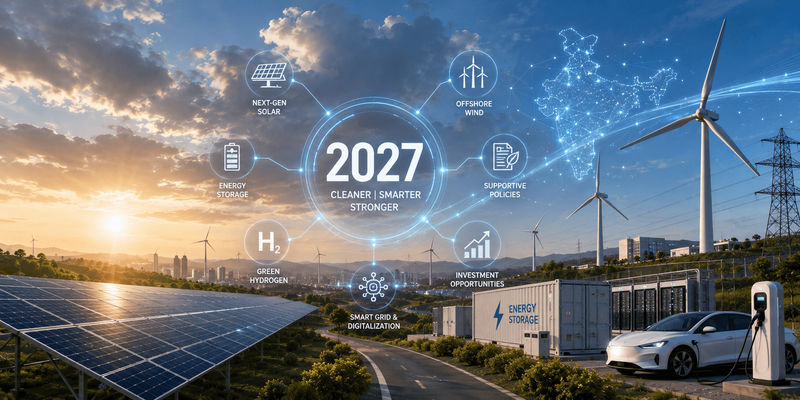
India's renewable energy sector is entering a new phase of growth. While the past decade focused on rapidly increasing installed capacity, the coming years will emphasize smarter grids, battery storage, hybrid projects, artificial intelligence, domestic manufacturing, and more efficient land utilization. For landowners, investors, and developers, understanding these trends is essential to preparing for the next wave of renewable energy development. This article explores the key technologies, policies, and market developments expected to influence India's clean energy landscape in 2027 and beyond.
Introduction
Renewable energy is no longer just about installing more solar panels or building additional wind farms. The industry is evolving into a highly connected ecosystem where power generation, energy storage, digital technology, transmission infrastructure, and advanced analytics work together to create a more resilient electricity system. India's ambition to significantly expand renewable energy capacity by 2030 is accelerating investments across the value chain. Developers are looking beyond traditional project models. Utilities are modernizing the grid. Technology companies are introducing AI-driven solutions. Manufacturers are increasing domestic production. For landowners, these changes mean that suitable land will continue to play a critical role—but project requirements are becoming more sophisticated. Here are some of the most important renewable energy trends expected to shape 2027.
1. Hybrid Renewable Energy Projects Will Become the New Standard
Rather than relying on a single source of renewable energy, developers are increasingly combining:
- Solar power
- Wind power
- Battery storage
Hybrid projects improve energy availability throughout the day while making better use of transmission infrastructure. They also help stabilize electricity generation despite changing weather conditions.
2. Battery Energy Storage Will Expand Rapidly
Battery Energy Storage Systems (BESS) are moving from pilot projects to large-scale deployment. Growing storage capacity will help:
- Improve grid stability
- Reduce renewable energy curtailment
- Store surplus daytime solar energy
- Support evening electricity demand
- Increase renewable energy reliability
Storage is expected to become a key component of future renewable energy parks.
3. Artificial Intelligence Will Manage Renewable Energy Assets
AI is becoming an operational tool rather than a future concept. Developers are increasingly using AI for:
- Predictive maintenance
- Energy forecasting
- Performance optimization
- Fault detection
- Asset management
- Weather analysis
This reduces downtime and improves plant efficiency throughout the project's life.
4. Smarter Grid Infrastructure
As renewable capacity grows, India's electricity grid must evolve alongside it. Key areas of focus include:
- Digital substations
- Smart grid technologies
- Advanced monitoring systems
- Grid automation
- Improved forecasting
- Faster power balancing
A stronger grid will improve the integration of renewable energy across the country.
5. Transmission Infrastructure Will Receive Greater Investment
Building renewable power plants is only part of the challenge. Electricity must also reach consumers efficiently. Continued investment in:
- Green Energy Corridors
- High-voltage transmission lines
- New substations
- Grid interconnections
will remain essential for supporting future renewable energy growth.
6. Domestic Manufacturing Will Continue to Strengthen
India is expanding its renewable energy manufacturing ecosystem through investments in:
- Solar cells
- Solar modules
- Inverters
- Battery technologies
- Electrical equipment
- Supporting supply chains
A stronger domestic manufacturing base improves energy security and supports long-term industry growth.
7. Green Hydrogen Will Gain Momentum
Green hydrogen is expected to become an increasingly important part of India's clean energy strategy. Renewable electricity will play a central role in producing hydrogen through electrolysis, creating additional demand for large-scale solar and wind projects. Industries such as steel, fertilizer, chemicals, and heavy transport are expected to drive future adoption.
8. Drone & Satellite Technologies Will Become Standard Practice
Project development is becoming more data-driven. Developers increasingly rely on:
- Satellite imagery
- Drone surveys
- LiDAR mapping
- GIS analysis
- Digital terrain models
These technologies improve land selection, engineering accuracy, and project planning.
9. Climate Resilience Will Influence Project Design
Developers are placing greater emphasis on designing projects that can withstand:
- Extreme temperatures
- Heavy rainfall
- Strong winds
- Flooding
- Changing weather patterns
Climate-resilient engineering helps improve the long-term reliability of renewable energy infrastructure.
10. Greater Focus on Sustainable Land Development
Land selection is becoming more comprehensive than simply identifying available acreage. Developers increasingly evaluate:
- Environmental sensitivity
- Biodiversity
- Water availability
- Infrastructure access
- Community considerations
- Long-term sustainability
Responsible land planning supports both project success and local development.
Emerging Technologies to Watch
- Technology
- Potential Impact
- Perovskite Solar Cells
- Higher efficiency and lower production costs
- Floating Solar
- Better use of reservoirs and water bodies
- Offshore Wind
- Additional renewable capacity along India's coastline
- Digital Twins
- Smarter asset monitoring and predictive analytics
- Robotics
- Automated panel inspection and cleaning
- Advanced Battery Chemistries
- Longer storage duration and improved performance
Several innovations are expected to influence the renewable energy sector beyond 2027: While many of these technologies are still scaling, they represent the next phase of renewable energy innovation.
What These Trends Mean for Landowners
As renewable energy projects become more advanced, developers are likely to place even greater importance on selecting technically suitable land. Key evaluation factors will include:
- Renewable resource quality
- Transmission access
- Contiguous land availability
- Road connectivity
- Environmental compatibility
- Legal clarity
- Long-term project feasibility
Professional assessments will remain essential before project development begins.
What These Trends Mean for Investors
Investors are increasingly viewing renewable energy as long-term infrastructure rather than simply electricity generation. Future investment opportunities are expected across:
- Utility-scale solar
- Wind energy
- Hybrid renewable projects
- Battery storage
- Transmission infrastructure
- Green hydrogen
- AI-enabled energy management
- Renewable energy manufacturing
Diversification across these segments is expected to strengthen the overall renewable energy ecosystem.
How Velante NRG Supports the Future of Renewable Energy
At Velante NRG, we continuously adapt to the evolving renewable energy landscape by combining advanced GIS mapping, satellite imagery, infrastructure analysis, legal due diligence, and engineering feasibility studies. As technologies such as AI, battery storage, hybrid renewable systems, and digital land assessment become increasingly important, our approach focuses on identifying land that supports responsible, future-ready renewable energy development. By aligning technical expertise with sustainable planning, we help connect landowners and developers while supporting India's transition toward a cleaner and more resilient energy future.
Frequently Asked Questions
Why are hybrid renewable projects becoming more common?
Hybrid projects combine multiple technologies, such as solar, wind, and battery storage, to improve electricity availability and make more efficient use of existing infrastructure.
Will battery storage become essential?
Battery storage is expected to play an increasingly important role in improving grid stability, reducing renewable energy curtailment, and supporting reliable power supply.
Why is AI important in renewable energy?
AI helps optimize plant operations through predictive maintenance, energy forecasting, equipment monitoring, and operational analytics, improving efficiency and reducing downtime.
Why does land selection remain critical?
Regardless of technological advances, renewable energy projects still depend on technically suitable land with strong renewable resources, infrastructure access, legal clarity, and environmental compatibility.
Conclusion
The renewable energy sector in 2027 will be defined not only by larger solar parks and wind farms but also by smarter technologies, stronger grids, advanced storage systems, and more sustainable project development. As India accelerates its clean energy transition, innovation across manufacturing, digital technologies, transmission infrastructure, and land assessment will play an increasingly important role in shaping the industry's future. For landowners, investors, and developers, staying informed about these trends will help them better understand the opportunities emerging across the renewable energy value chain. At Velante NRG, we remain committed to supporting this transformation through data-driven land assessment, responsible development practices, and technical expertise that helps build the next generation of renewable energy projects in India.
Table of Contents